


Everyone was new once.
If you’re still in the “research” phase of your Pilates journey – aka deciding if this type of movement is right for you and your body – you might be feeling a combination of curiosity and uncertainty. The equipment is unfamiliar, the cues can be confusing, and the pace might be different than what you’re used to. We get it. Just remember this: EVERYONE walked into their first Pilates class feeling some degree of apprehension. (And if you didn’t, congrats.) Don’t let *all of that ^^^* discourage you.
Let go of right.
The first rule of Fight Club is to never talk about Fight Club, and the first rule of Pilates is to keep an open mind about Pilates. Your first class isn’t about getting everything right…or even most of it right. (Honestly if you can just let go of the idea of “right” altogether you’ll have a more enjoyable experience.) Obviously no one likes mixing up left/right or up/down, but it happens to the best of us. Let it go and have fun. You’re in good company. And if you find yourself at a studio that takes itself too seriously, keep looking. Pilates should be fun. It’s a practice – and learning how your body feels when movement is intentional, supported, and connected from the inside out is part of the deal. Go ahead and laugh at yourself. It’s not that serious.
Joseph Pilates – mind, body, spirit.
When you finish chuckling at yourself for confusing your left and your right for second, remember that Joseph Pilates called his method Contrology: the complete coordination of body, mind, and spirit. That coordination doesn’t appear on day one. It’s built slowly and deliberately through repetition and attention. You just have to log the hours. It also requires a ton of listening to really stay dialed in. The goal of your first class is not mastery. It’s awareness. Listening to the cues and your body is so important. This is the only way you’ll figure out how your body responds when movement is intentional instead of rushed. Feeling uncertain about what you’re doing doesn’t mean you’re doing it wrong.
It’s not a contest.
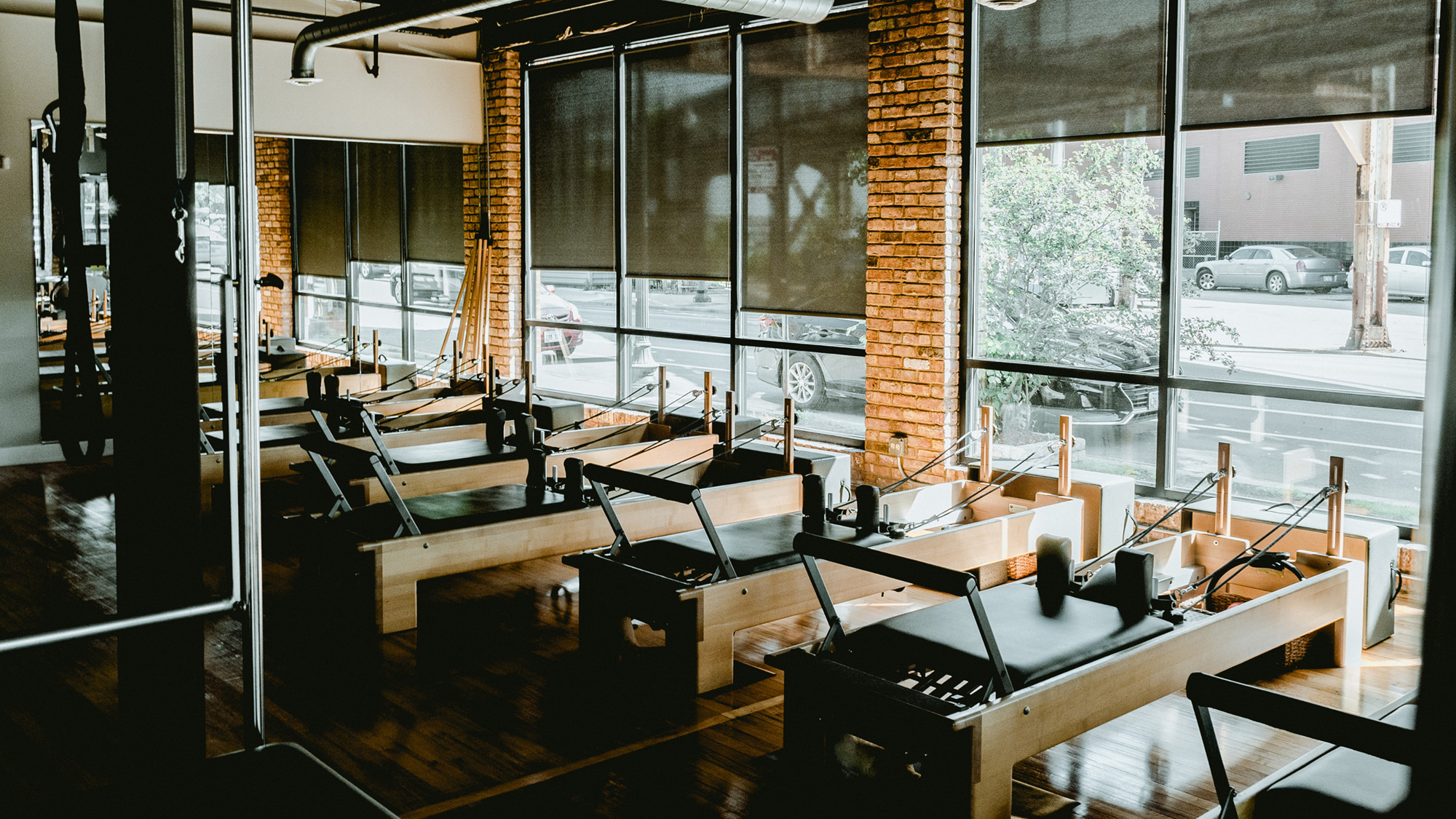
Your first class isn’t a test or a performance. It’s an introduction – to the work, the apparatus and props, and to yourself. It’s also an invitation to explore the intersection of where all those meet. If it helps you feel more empowered to be prepared and know what to expect, then by all means – finish this blog post and watch all the YouTube and TikTok videos you need to feel good. Then BOOK THE CLASS.
Dress comfortably – move freely.
What you wear matters, but only because you want to move freely. Comfortable, form-fitting clothing helps your instructor check your alignment and support your movement during class. (We’re not here to tell you what to do, so if sweats are your thing – go for it. Just consider your instructor’s POV and their desire to ensure you get the most out of your studio time.) Grip socks aren’t just about following studio rules – they’re about connection. They steady your movement on the mat or footbar while maintaining cleanliness on shared studio equipment. (And since you have to wear socks, might as well wear cute ones.)
Pack lightly.
What should you bring with you? Not much. Yourself, water, grip socks, a good attitude, and a willingness to try something new. (If you have long hair, you’ll also want a hair tie. Springs and long hair do not mix.) The reformer, props, and the direction will already be there. You just need to show up with an open mind (5-10 minutes early so you can settle in without additional running-late stress).
Check your baggage.
What should you not bring with you? Worry/Stress/Fear. Go ahead and leave your concerns – that you’re not flexible enough, strong enough, or coordinated enough – somewhere (anywhere!) else. Pilates doesn’t require any of the above when you walk in the door. It’s progressive by design. Each exercise prepares your body for the next. Strength, mobility, and control are built layer by layer, not demanded all at once. Awareness matters way more than ability. Skill is earned.
Don’t stress about unfamiliar cues.
As the class unfolds, you’ll hear cues that will probably be unfamiliar. (Check out our blog post here for more on that.) If you get rattled when it happens – and it probably WILL happen – return to the principles that guide the work: breath, concentration, control, centering, precision, and flow. These aren’t rules to memorize. They’re tent poles. When you feel lost, come back to your breath. Find your center. Slow down, look around, listen for the next cue, and resume moving when you feel ready. (And seriously, don’t forget to have fun.)
Patience + awareness = growth.
Pilates rewards patience and awareness. Over time, what you practice in class begins to show up everywhere – how you stand at the counter, how you walk through the park, how you sit at your computer. These changes don’t happen with a lot of fanfare. They accumulate quietly and gradually over time.
Just show up and find out.
Have you booked your class yet? No? Go do it. All you have to do is show up. Slow down. Breathe. Move with intention. Group Pilates classes provide an opportunity to exist in your body for 50 minutes. Don’t overthink it. Your first class isn’t about being the best at Pilates, it’s about discovering an embodied movement experience that you enjoy. Pilates really is for every body.
p.s. If you were hoping for specific information on what to expect in terms of class flow, we can’t tell you that for sure. Most classes will include some combination of footwork, planking, hands in straps, and feet and straps and hopefully at least a few of Joseph Pilates’ original exercises. At the end of the day your instructor is there to do their job – they’ve put in the work, logged the training hours, and have mindfully planned the class. Be confident in their ability to safely guide you through a solid class flow.

