
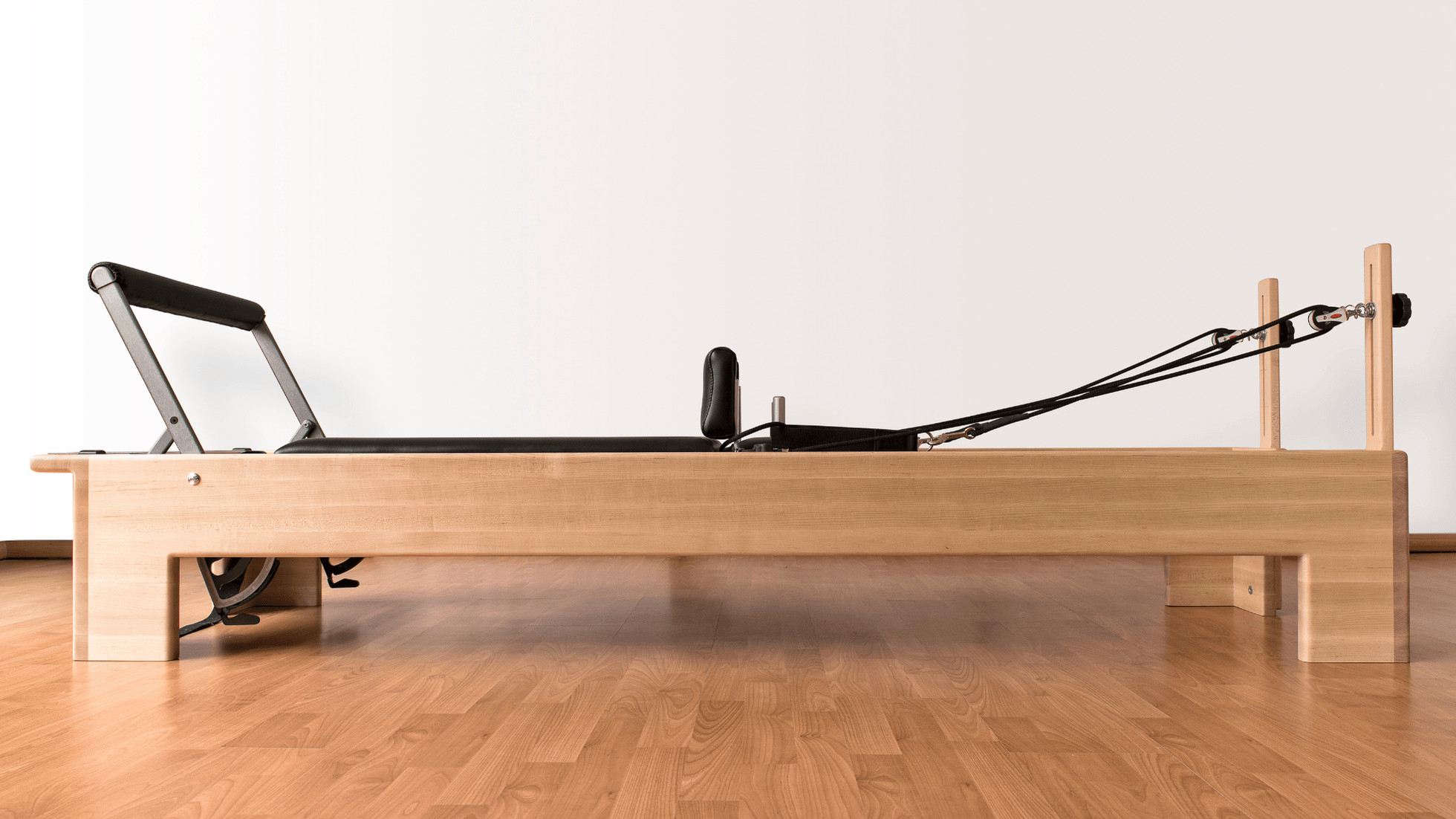


Joseph Pilates’ Most Popular Apparatus
At first glance the Pilates reformer can look intimidating. Its network of springs, straps, and pulleys can give a real torture-device vibe. But its purpose is simple: it was created to either assist movement or make it more challenging. The exercise and spring settings will determine which is which…and you’ll figure out quickly how any given exercise is going to play out based on your spring settings.
Let’s be really clear on one thing before we dive in: the reformer doesn’t force the body into any shape. (Pilates is never about forcing.) It responds to how you move, offering both resistance and assistance depending on what the exercise requires. Though we have lots of love for the Wunda chair, trapeze, springboard, and ladder barrel, the reformer most easily the most influential (and fun) pieces of Pilates equipment you’ll work with. Let’s get to know it…
Migration and Evolution
The reformer was developed by Joseph Pilates in the early 1900’s as part of his larger method, which he called Contrology. His goal was not simply to exercise muscles, but to restore natural, efficient movement to bodies that had lost their mind-body connection and the ability to move freely. Using a system of springs to help injured and bedridden patients move safely while lying down, Joseph Pilates transformed the way we think about rehabilitation and functional movement.
When Joseph Pilates brought his work to New York City in 1926, the reformer became a staple of his studio. Dancers and athletes were drawn because it allowed them to build strength, mobility, flexibility, and control with minimal impact.
The reformer trains the whole body at once – strengthening and lengthening while reinforcing coordination and connections rather than isolating parts….a philosophy that lives on and makes Pilates special.
What Makes It Different
Unlike traditional gym equipment, the reformer doesn’t rely on gravity alone. Resistance comes from the springs, which engage muscles differently than weights. Springs provide constant feedback and offer increasing resistance through range of motion. They require the body to control both the effort phase and the return.
The moving carriage adds another layer of challenge. Because the surface beneath you moves, stability must come from within. This is where Pilates’ emphasis on the core (aka Powerhouse) becomes essential. Without control through the trunk and pelvis, movement on the reformer quickly becomes unsteady.
This combination of spring resistance and a moving platform is what makes the reformer so effective – and so adaptable.
The Frame: The Foundation
The frame is the structural foundation of the reformer. It supports all moving components and ensures that the carriage travels smoothly and evenly. A stable frame allows the body to trust the machine, which is essential for controlled movement. With a solid foundation, the body can focus on alignment and precision rather than compensating for instability.
The Carriage: Where Movement Lives
The carriage is the padded platform that moves along the frame. This is where you sit, lie down, kneel, place your box, or stand during exercises.
Because the carriage moves, it challenges balance and stability while supporting range of motion. How you control the carriage – particularly when returning it – directly impacts the building of strength and coordination.
Springs: Resistance and Feedback
Springs are the heart of the reformer. They can be added or removed to adjust intensity, but their role extends beyond just increasing load. Springs provide feedback. They help guide movement, support alignment, and reveal when the body is relying on momentum instead of control.
Spring tension is determined by the intention for the exercise. More resistance isn’t always better. Sometimes lighter springs demand more control, more stability, and more precision.
The Spring Bar: Adjusting the Conversation
The spring bar is where the springs attach to the reformer. Its position changes the starting point of the carriage and the amount of tension in the springs.
Adjusting the spring bar (aka gearing the carriage out) allows the reformer to accommodate different body sizes and exercise variations, making the equipment highly adaptable.
The Footbar: Your Connection
The footbar is where many exercises begin. It one of the places where your feet (and sometimes hands) make contact with the apparatus to initiate movement. Its height and angle affect joint positioning, muscle recruitment, and range of motion.
Foot placement on the footbar is important. How you press through your feet influences alignment throughout the entire body. The reformer makes this relationship obvious: when the feet lose connection, the rest of the body follows. (This is why grip socks are SO important. Slipping during footwork or bridging on the reformer or chair isn’t just annoying – it can actually be dangerous.)
The Headrest: Supporting the Neck and Spine
The headrest supports the head and neck in supine positions. It is adjustable and should be lowered during exercises that involve spinal articulation, such as bridging, to allow the spine to move freely and safely. This detail reflects a larger Pilates principle: setup shapes movement. And small adjustments create safer, more effective outcomes.
Shoulder Blocks: Stability and Feedback
Shoulder blocks help anchor the upper body, particularly during supine and inverted exercises. They provide both physical support and proprioceptive feedback, helping you stay stabile and secure on the carriage.
Straps, Ropes, and Pulleys: Extending Movement
Straps attach to the carriage and are held in the hands or placed around the feet. Ropes connect the straps to the reformer, while pulleys guide their movement and adjust the angle of resistance.
Together, these components allow resistance to travel through the arms and legs while remaining connected to the center of the body. Adjustments in rope length or pulley height subtly change which muscles are emphasized and how the movement feels.
Why Understanding the Reformer Matters
Getting comfortable with the reformer helps you move with awareness and intention. When you understand how the apparatus works, you’re better equipped to make safe adjustments and refine your movement. The reformer isn’t there to overpower you, so don’t let the springs boss you around. You control the carriage on the return, not the other way around.
Pilates is a practice of intelligent movement, control, and connections. And the reformer is an effective teacher. Over time, the quiet conversation between your body and apparatus will become more refined – and your relationship with the reformer becomes one of embodiment and a deeper mind-body-spirit connection.
p.s. It’s ok if you have a favorite reformer at your home studio (we do, too)….just, like, try to be chill about it (and we will, too).

