


The False Dilemma of Form vs. Fashion
Grip socks may seem like a small detail, but sometimes the smallest details make a big impact. The right sock can change how secure you feel on the reformer, how grounded you are during footwork, and how confidently you move through class. With so many styles available – crew, ankle, ballet-style – it’s worth understanding the difference so you can choose a fit that supports your practice…and your vibe.
Grip socks aren’t just functional – they’re personal. What you choose to wear on your feet affects how you feel walking into the studio, stepping onto the reformer, and moving through class. Some people feel more confident with extra coverage, others prefer something minimal, and some love a sock that feels expressive and fun. And while we have an obvious bias, don’t buy into the false dilemma of form vs. fashion. Choosing a Pilates sock that aligns with both your movement needs and your personal style helps you show up feeling your best.
(Spoiler alert: There’s no single “best” Pilates sock type. There’s only the best type for you.)
Why Pilates Socks Matter More Than You Think
Pilates asks a lot from your feet. They’re your foundation for balance, alignment, and control, whether you’re pressing into the footbar, standing on the carriage, or stabilizing through single-leg work. In addition to meeting the requirements to even attend a group Pilates class, grip socks provide traction for your practice.
Beyond safety, socks also influence proprioception – your sense of where your body is in space. A well-designed grip sock helps you feel grounded without disconnecting you from the subtle but important feedback coming from your feet.
Crew Socks: Supportive and Secure
Crew socks provide the most coverage, extending up the lower calf. This style offers a feeling of containment and warmth that many people find grounding, especially during slower, more controlled work.
Crew socks are a great choice if you:
- Prefer a secure, “held” feeling through the ankle and lower leg
- Take reformer-heavy classes with standing or balance work
- Practice in cooler studios
- Like a sock that stays put without adjustment
- Think they’re cute
Ankle Socks: Minimal and Lightweight
Ankle socks sit lower on the ankle and offer a lighter, less restrictive feel. They’re often the go-to for practitioners who want grip without much coverage.
Ankle socks are a good fit if you:
- Prefer minimal fabric and a barefoot-adjacent feel
- Tend to run warm
- Want an easy, everyday option
- Think they’re cute
Ballet-Style Socks: Flexible and Articulate
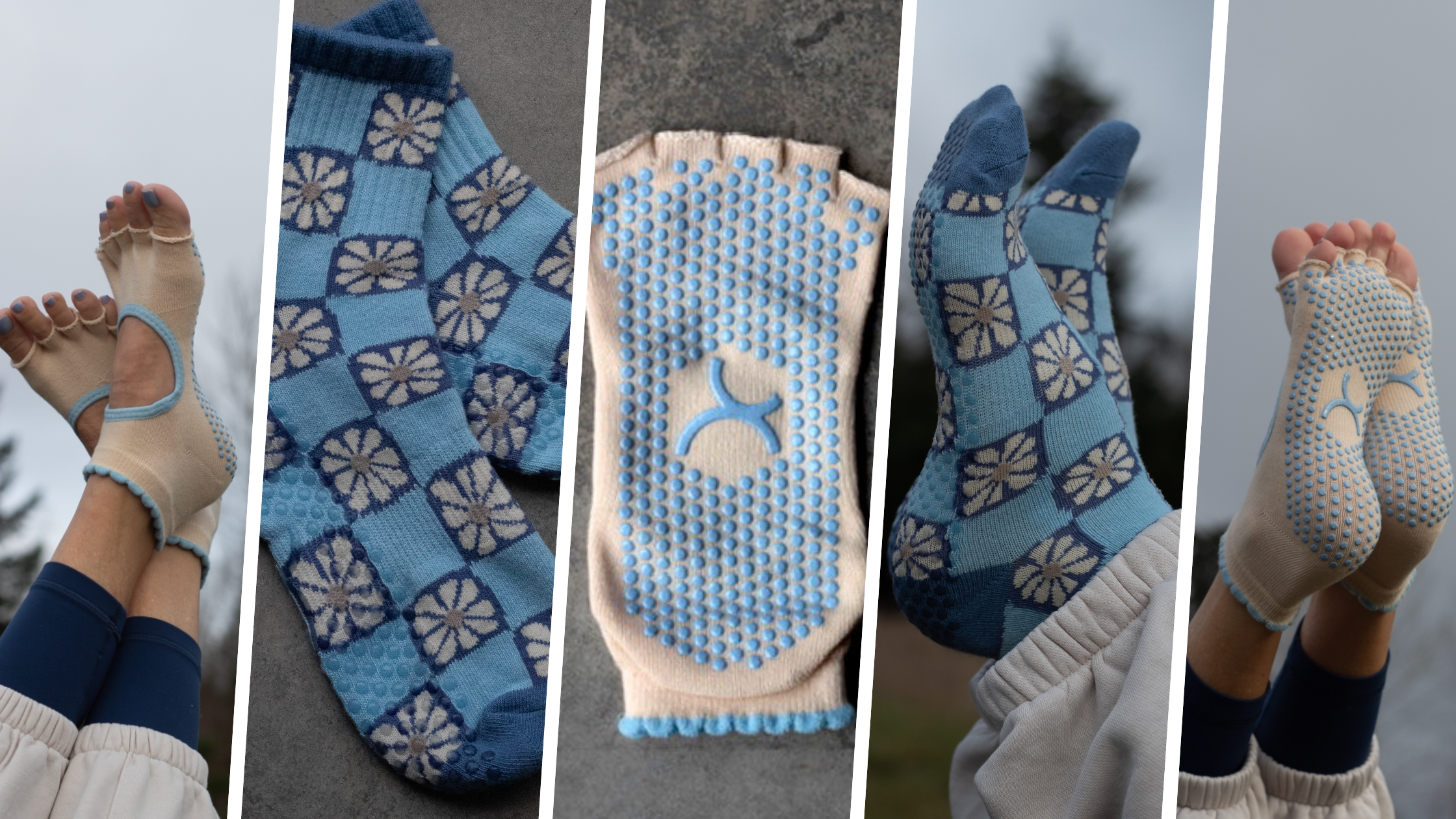
Ballet-style Pilates socks are designed to highlight foot articulation. Often featuring a strap across the top of the foot or an open, slipper-like silhouette, they’re ideal for practitioners who want to feel every detail of their footwork.
Ballet-style socks work well if you:
- Value foot articulation and sensory feedback
- Have a background in dance or barre
- Prefer a secure fit without bulk
- Spend a lot of time in pointed or flexed foot positions
- Think they’re cute
How to Choose What’s Right for You
When deciding between crew, ankle, or ballet-style socks, consider how you move.
Ask yourself:
- Do I want more support or more freedom?
- Am I focused on stability, articulation, or versatility?
- What kind of classes do I take most often?
- How do I want my feet to feel during transitions and balance work?
- Do I run hot or cold during class?
- What sock completes my fit in a way that feels good?
The great news is that you don’t have to just choose one – most of us have all of the above and choose based on temperature, class type, and mood.
Bonus Content: Toe Socks – for Those Who Want to Feel it All
Toe socks offer the most barefoot-adjacent experience you can get without going barefoot. By separating each toe, they allow the foot to spread naturally and engage more fully – something many students appreciate when foot placement and articulation are central to the work.
On the footbar, toe socks let you feel exactly how your toes are pressing, gripping, or relaxing, which can improve alignment and balance. On the carriage, that added sensory feedback helps with stability during standing or single-leg work. And on the mat, separated toes make it easier to sense weight distribution and connection to the floor, reinforcing that from-the-ground-up awareness Pilates is known for.
Despite the benefits mentioned above, toe socks definitely aren’t for everyone. Some people find anything between the toes distracting or uncomfortable, especially if they’re new to them. If you prefer a smoother, uninterrupted feel – or simply don’t like being reminded that your toes exist – this style may take some getting used to.
Toe socks tend to be a love-it-or-hate-it option. For those who enjoy heightened sensory feedback (and don’t mind fabric between their toes) they’re great. Toe Socks can typically be found in all the styles mentioned above.
One More Thing: Fit and Grip Matter
No matter the style, a Pilates sock should fit snugly without restricting movement. The grip should feel secure without being sticky or distracting, allowing your feet to move naturally while staying grounded. Whether you choose crew, ankle, or ballet-style socks, the right option is the one that helps you feel steady, connected, and confident in your movement.
There’s a reason we started Lateral Pilates: we were tired of choosing between style and performance – so we made socks that do both.
Our grip socks are designed to actually grip when it matters most, whether you’re flowing through reformer moves or stretching on the mat at home. No sliding. No distractions. No bs.

